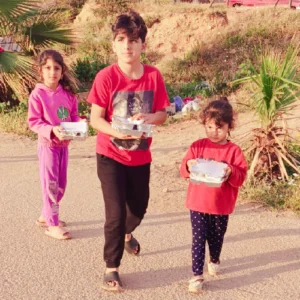
Displaced migrant children walk along a path.
Arrupe Migrant Center is the only organization in Lebanon, aside from some embassies, that may occasionally provide burial services for migrant families. Before the onset of the March 2026 conflict, we facilitated fewer than a dozen burials for different ethnic groups and communities. During the March 2026 conflict, our requests for funeral and burial services increased because families had no other options. Many embassies had closed, and their citizens had nowhere to turn. Mental health services had ceased, leaving everyone to navigate an uncertain situation, living day by day amidst the threat of drone strikes and occasional bombing campaign deaths by the Israeli Air Force.
The first two burials during this time were babies; their deaths were not casualties of the war but were from sexual and gender-based violence (SGBV), another peril of the country for young migrant women.
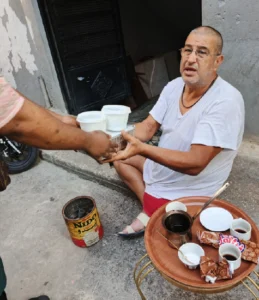
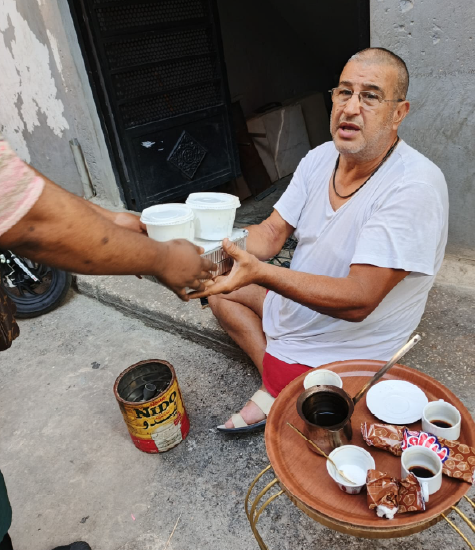
A man displaced from the May 2026 conflict receives food.
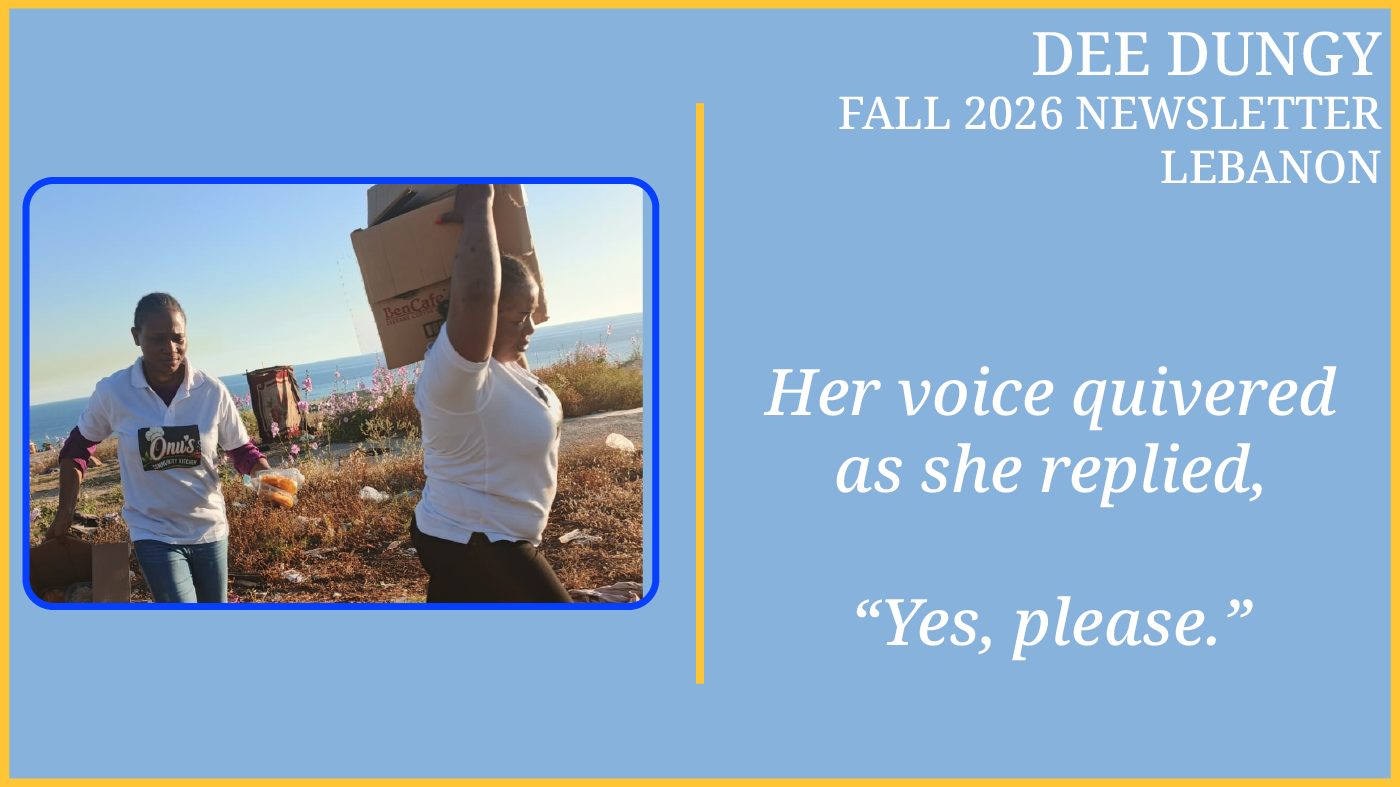
I made all the arrangements for the burial, asked the priest and hearse to meet the young lady at the morgue, accompanied by her country’s community leader, by 9 a.m. In this case, the young mom was moving from place to place, and I had a short conversation with her to obtain pertinent information and ask if she wanted a cross affixed to the casket. Her voice quivered as she replied, “Yes, please.” I followed up with her community leader to make sure the mom would be at the morgue at a particular time, as delays would warrant additional fees charged by the morgue. However, on the day of pickup, the mother went missing. No one could find her until several hours later.
When she finally arrived at the morgue, she had to be coaxed from the vehicle to identify her child. She was retraumatized when the morgue placed the corpse in a pillowcase-like bag and placed it into the hearse. I felt the sting of inhumanity upon hearing this news. Once at the cemetery, the mom remained in the hearse, while her community mourned on behalf of the mom as they placed the casket in a shared vault later to be placed in a mass grave.
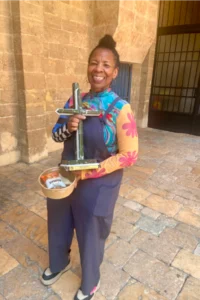
Dee in Lebanon
Like many young migrant women in Lebanon, especially those from African countries, she was among the lowest-paid domestic or factory workers under the Kafala system, a sponsorship system that ties a migrant worker’s residency and employment to a specific employer. This system grants employers substantial authority over their workers, including control over job changes and permission to leave the country, creating a significant power imbalance that heightens the risk of exploitation and abuse.
At 19 years old, the mother was too overwhelmed with shame and had no mental health support or protection. She felt unable to reach out to her family abroad. Her fears were compounded by the surrounding circumstances: her employer had abused her, she had been left without stable housing, and the March 2026 conflict had displaced more than 1.2 million people. Like many others, she was living day by day amid drone strikes and Israeli bombing campaigns.
When asked why she and others had not sought shelter, they felt the drones overhead seemed to target buildings rather than the open beach areas, further deepening their sense of vulnerability and fear.
The cross affixed to her child’s coffin is the hope the mom had for her child’s soul, anchored in Christ. I pray that the mom may not fall into absolute hopelessness.
Please consider supporting my mission work in Lebanon with a donation through the link below.
I invite you to walk with me as a “COMPANION IN MISSION.” Companions in Mission are friends and generous donors who give financial gifts on a regular (usually monthly) basis. For more information, visit Become a Companion in Mission. Thank you so much for your generosity!
 Dee Dungy is the regional advocacy officer at the Jesuit Refugee Service East Africa in Nairobi, Kenya. A lay missioner since 2011, she previously served in Cambodia.